

TLDR: Switching to the Supertiny gives you 7 things your current brick can't 👇
44mm cube. 70 grams. Same 65 watts.
44 millimetres on its longest edge. Same volume as the golf ball you've been losing on the course. Smaller than the AirPods case already in your pocket.
This is the size first, and the spec sheet second. Once a charger fits in a coin pocket, every other thing you used to carry stays on the desk at home.
Plug in the inCharge 2-in-1 100W USB-C cable. Both devices, full speed.
The Supertiny puts out 65 watts. That's enough to fast-charge an iPhone and an iPad simultaneously through the inCharge 2-in-1 100W USB-C cable — one cable, two devices, both at full speed.
The brick on your desk does one device at a time. The Supertiny does two. That's the difference between 65 watts of GaN and an older silicon charger split across mediocre ports.
USB-PD 3.0 with PPS. The two protocols every fast-charging device wants.
Every fast-charging device wants a specific protocol. iPhone wants USB-PD 3.0. Samsung Galaxy wants PPS for adaptive fast-charge. MacBook wants 65 watts of PD at full draw. Most chargers ship one protocol and call it fast.
The Supertiny ships both. USB-PD 3.0 and PPS, side by side. Plug anything in. It negotiates the highest profile that device supports — automatically.
USB-PD 3.0 + PPS at the full 65 watts. The iPhone caps the rate — the Supertiny delivers it.
Plug your iPhone into the Supertiny. From dead battery to 80% takes about 50 minutes. To 50% in around 30. USB-PD 3.0 with PPS — the same fast-charge spec Apple's own brick uses.
The iPhone tells the brick how fast it can take in. The Supertiny gives it the full 65 watts when it asks. Same speed Apple delivers, from a cube four times smaller.
100 to 240 volts. Three plug shapes. No voltage converter.
100 to 240 volts. 50 or 60 hertz. The Supertiny takes everything between. The charger that runs in your kitchen in Geneva runs in a hotel in Tokyo, a co-working space in São Paulo, a friend's couch in Sydney.
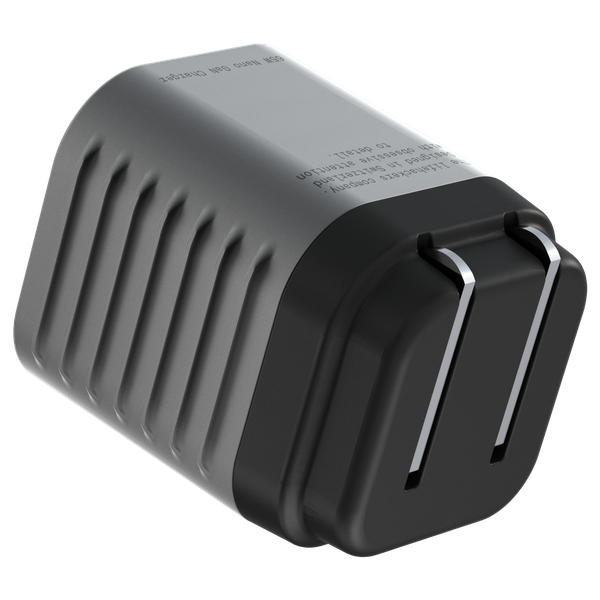
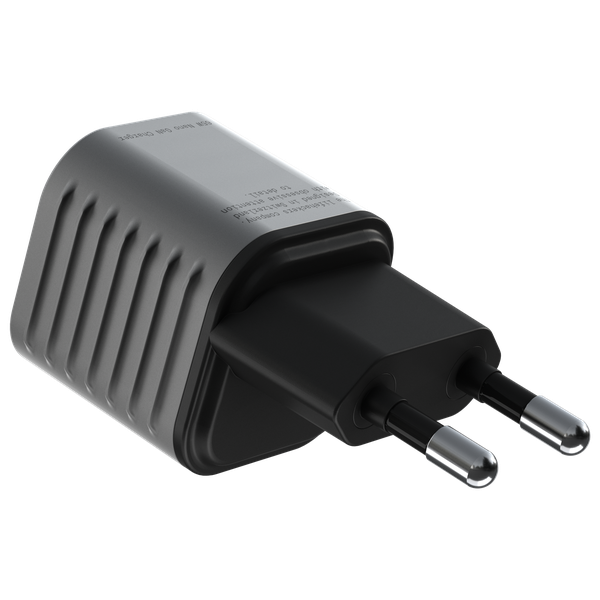
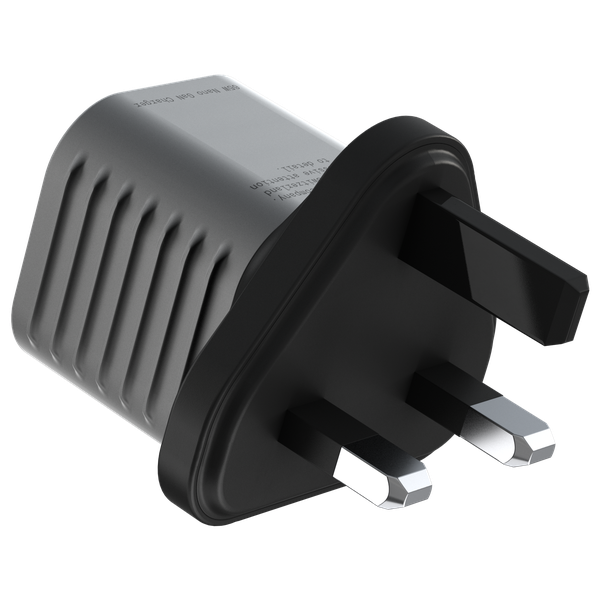
No voltage converter. Never. You only ever pick the plug shape — US, EU, or UK — and the folding prongs make it disappear into any pocket on the way there.
Engineered to the gram in Switzerland. Sturdy and made to last.
The team behind the inCharge cable has been designing small precise objects in Switzerland for fifteen years. The Supertiny is in that tradition.
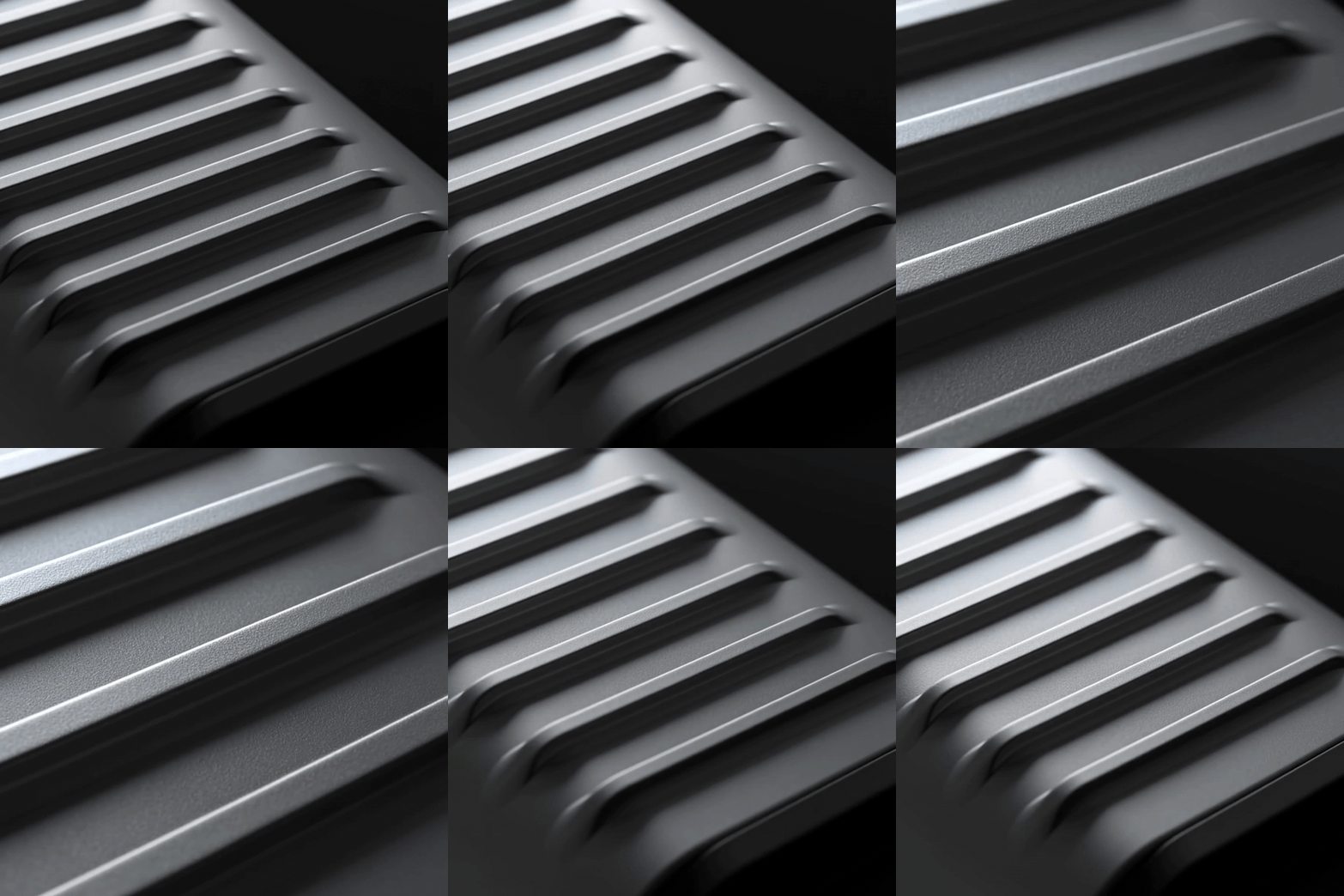
You'll notice it the first time you hold one. The prongs fold with the friction of a watch crown. The USB-C port clicks when the cable engages — once, exactly. The housing edge has a chamfer instead of a corner. Things that don't show up in the spec sheet, but the ones that mean the charger you bought today is the same one in your bag in 2036.
4.59★ from verified buyers. Regional warehouses in EU, US, UK. 30-day returns.
5,000+ backers on Kickstarter brought the Supertiny to production. Today it ships from regional warehouses in the EU, US, and UK — typically 2 to 5 business days to your door.
3,320 customers have reviewed it on rollingsquare.com at 4.59 stars. Every order ships with a 30-day return — if it doesn't make your bag, send it back for a full refund.
US, EU, or UK folding plug. Available on its own or bundled with our 2-in-1 USB-C cable and the inCharge X tracker-cable, for the bag that goes everywhere.
US
Two-prong
EU
Round-prong
UK
Three-prong
Yes, at 65 watts. The 16-inch MacBook Pro can draw up to 96 watts at peak, so the Supertiny will charge it slightly slower than its native 96-watt brick under heavy load. During normal use, you will not notice the difference.
The single-charger version is the charger only. The bundle versions include cables. Choose the version that matches what you already own.
Most GaN chargers are 100 to 150 grams and the size of a deck of cards. The Supertiny is 76 grams and the size of a sugar cube. The difference is the engineering tolerance and the housing geometry, not the semiconductor.
Orders ship from regional warehouses in the EU, US, and UK. Delivery is typically 2 to 5 business days.